AC maintenance in Estero, before the rainy season starts
A tune-up is where we catch the weak capacitor and the slow drain before they turn into a hot house in August. We maintain central AC, heat pumps and mini-splits in Estero, Fort Myers, Bonita Springs and the neighborhoods between them.
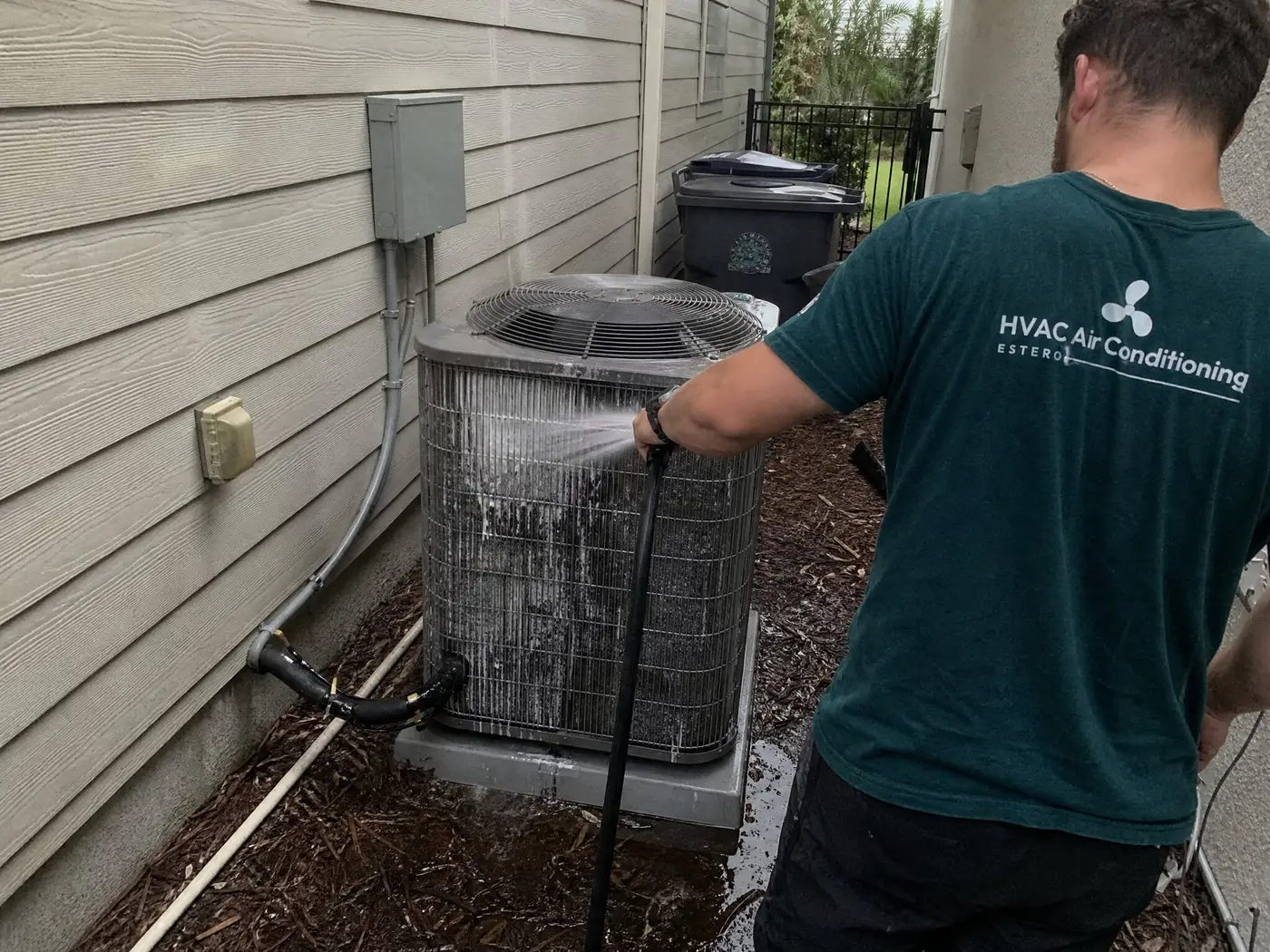
What an AC tune-up covers
Every visit works through the same list.
- Rinse the outdoor coil and clear leaves and grass from around the unit
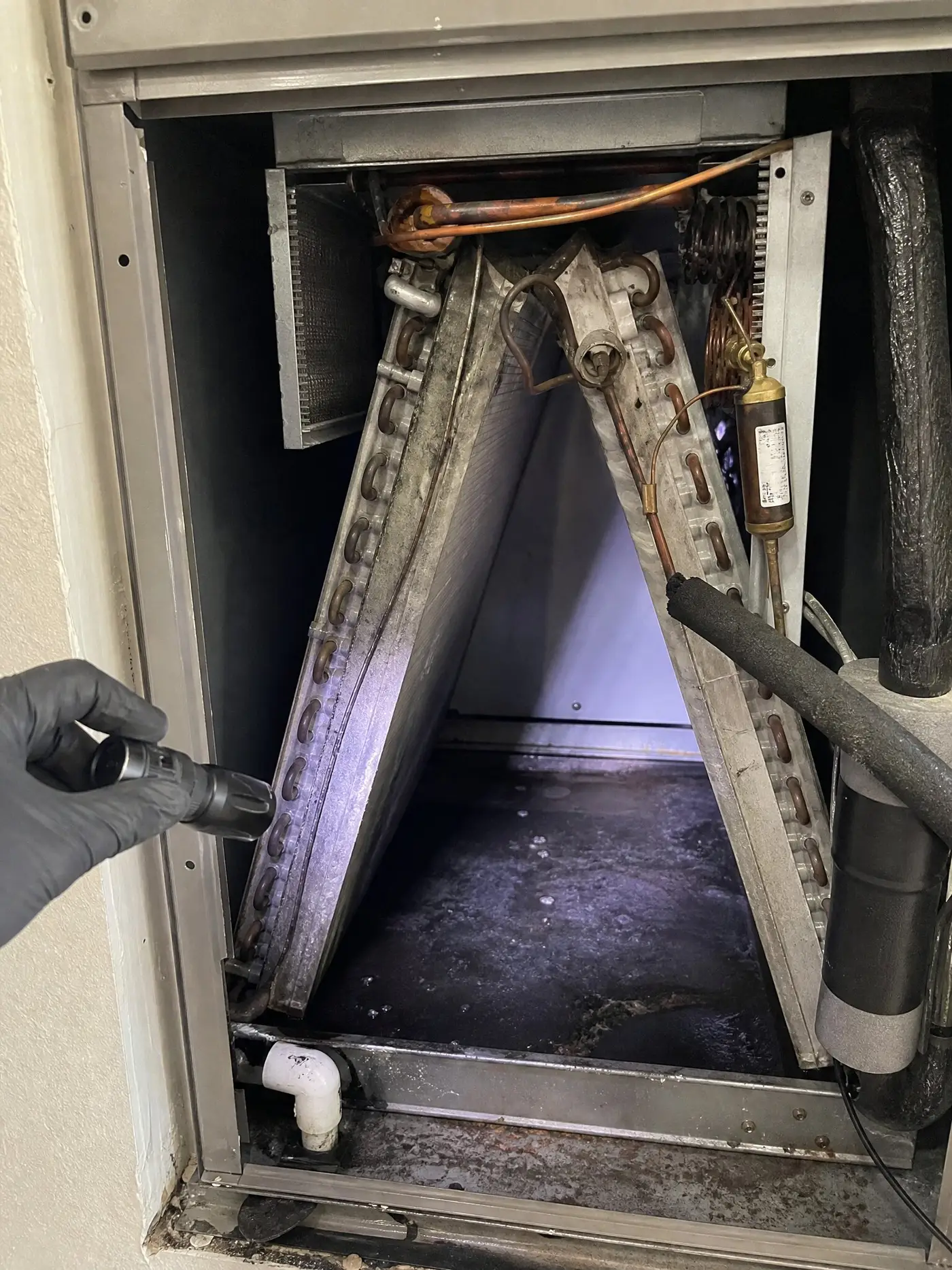
- Inspect the indoor evaporator coil and clean it when it needs it
- Flush the condensate drain line and test the float switch
- Test the capacitor with a meter against its printed rating
- Look at the contactor for pitting, burn marks and ant nests
- Tighten electrical connections and measure voltage and current on the motors
- Check refrigerant pressures and line temperatures
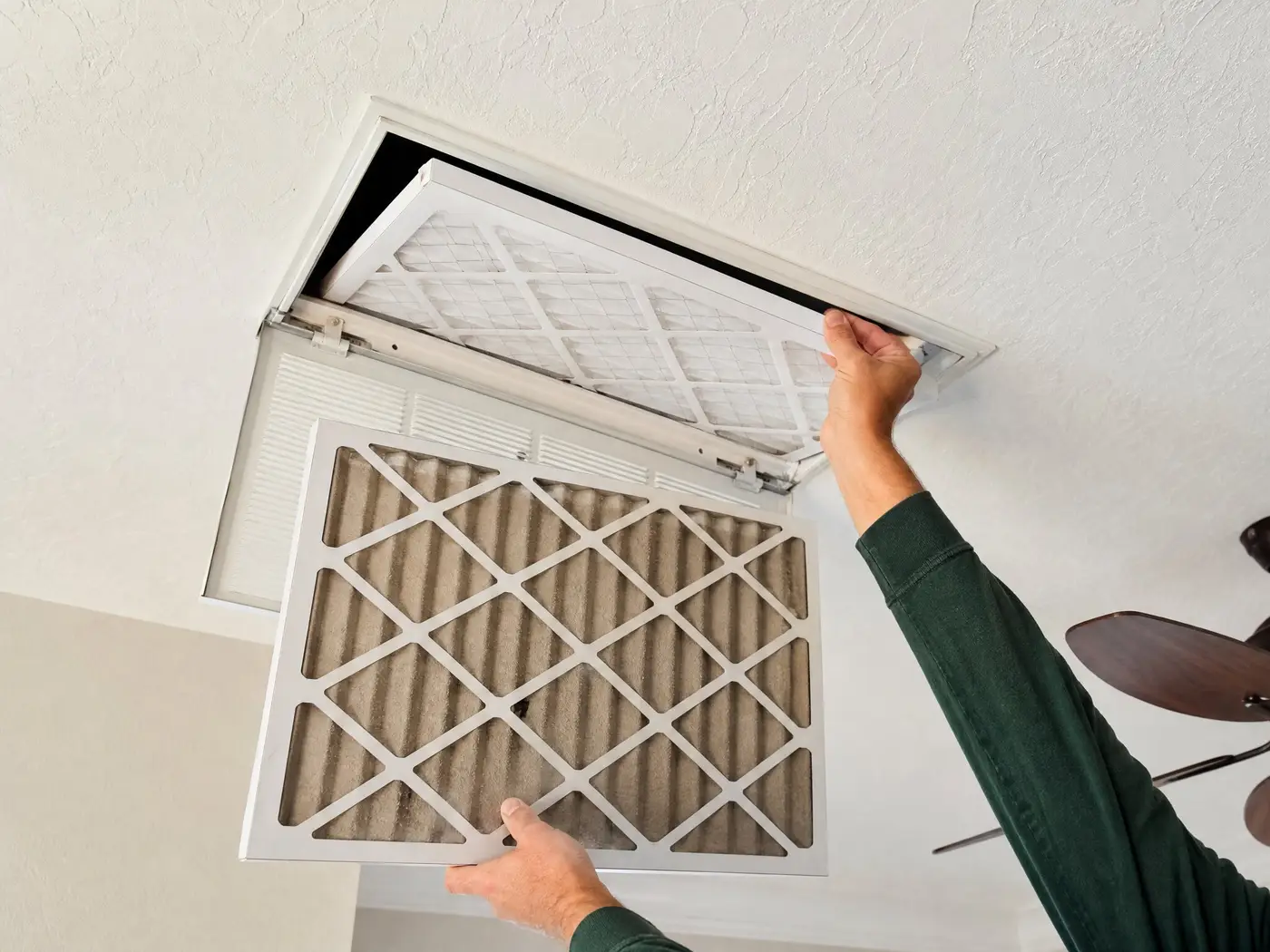
- Check the filter and tell you how often yours needs changing
- Measure the air at a supply vent and watch a full cooling cycle
Why AC maintenance matters more around Fort Myers and Estero
An air conditioner here works longer than one up north. Southwest Florida’s rainy season alone runs from mid May to mid October, by the National Weather Service’s count, and the hot months on either side keep the system busy too.
ENERGY STAR’s maintenance checklist explains what all that running costs. Dirty coils make a system run longer and shorten its life. A plugged condensate drain can cause water damage and push indoor humidity up.
Humidity is the part you feel. The EPA suggests keeping indoor relative humidity below 60 percent, ideally between 30 and 50, to keep mold from growing. A clean coil and a clear drain are a big part of how your AC gets the house there.
What you can do between visits
Check the filter every month. The Department of Energy’s advice is to clean or replace AC filters once a month or as the manufacturer recommends, and in a house where the system runs most of the day, monthly is about right.
Keep hedges and trash cans back from the outdoor unit so air can move through the coil. Find where your drain line comes out, usually a short PVC pipe near the foundation, and make sure nobody has buried it in mulch.
Set the thermostat fan to Auto, not On. In a humid climate, a fan that keeps blowing after the compressor stops pushes water from the wet coil back into the house.
The indoor coil gets checked too
The evaporator coil sits inside the air handler, where nobody looks at it. Dust that gets past the filter sticks to the wet fins, and over time it turns into a mat that blocks airflow and feeds the sludge that clogs drain lines.
We open the cabinet and put a light on it. If it’s clean, we close it up. If it needs cleaning, we’ll show you why before we do it.
Air quality add-ons, if you want them
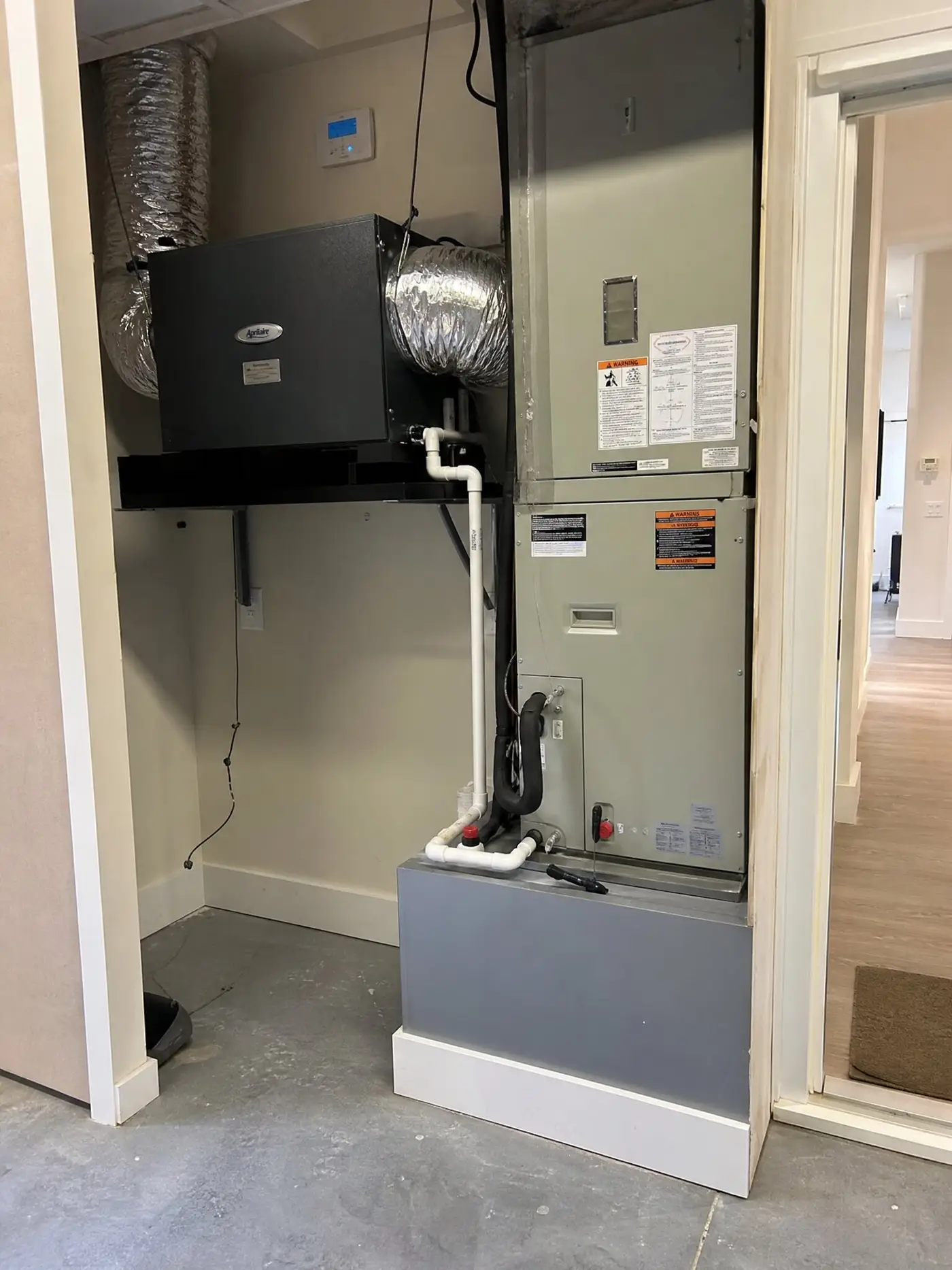
Some homeowners ask about UV lights, better filtration or a whole home dehumidifier, and we install all three. If the house feels damp with the AC running, though, we check the system first. A clogged drain, an oversized unit or a fan left on On can cause that same clammy feeling.
Heat pumps and mini-splits get the same attention
A heat pump gets the full tune-up list, plus a check that it switches into heating mode cleanly, since most of them sit in cooling for months before the first cool night.
Mini-splits are simpler in some ways and fussier in others. The filters in the indoor head clog fast and the small drain can back up and drip down the wall. We clean the filters and the coil, flush the drain, and check the outdoor unit the same way we would a central system.
Maintenance won’t make an old system new. If yours is past ten years and needs parts every summer, read our repair or replace guide.
AC acting up? Tell us what it’s doing.
Call or text, or tap the chat button in the corner. Tell us what the system is doing and where you are, and we’ll take it from there.
Related
AC repair
Warm air, a humming outdoor unit, water at the air handler or a system that shut itself off. We find the cause, show you and fix it.
AC repair detailsAC installation
New central AC, heat pump and mini-split systems sized with a load calculation, set level, anchored and finished with a drain built to stay clear.
AC installation detailsClogged AC drain line
Water at the air handler or an AC that shut itself off? How the condensate drain clogs, what the float switch does and what you can safely try.
Read the guideQuestions we get
How often should my AC be serviced?
Once a year at minimum, and spring is the time to do it, before the rainy season. A system that runs hard all year or sits under trees can use a second visit in the fall.
What’s the difference between a tune-up and a repair?
A tune-up is a check and a cleaning on a system that’s working. A repair fixes something that’s already broken. Tune-ups find a lot of small problems before they become repairs.
Will a tune-up lower my electric bill?
It can help. The Department of Energy says replacing a dirty filter with a clean one can lower an air conditioner’s energy use by 5 to 15 percent, and a clean coil and the right refrigerant charge matter too.
Do you clean the drain line during maintenance?
Yes. We flush the condensate line and test the float switch at every visit, because a clogged drain is one of the most common summer calls we get.
Can I rinse the outdoor coil myself?
A gentle rinse with a garden hose, with the power off at the disconnect, is fine. Skip the pressure washer, since the aluminum fins bend easily and bent fins block airflow.
Do you maintain mini-splits?
Yes. Mini-splits need their filters washed, their coils cleaned and their drains kept clear, the same as a central system.