Clogged AC drain line: the signs, the float switch and what you can do
Your AC pulls water out of the air all day, and that water has to go somewhere. When the drain line clogs, you get a wet floor, a full pan or a system that shuts itself off. This guide covers how to tell, and what’s safe to try before you call.
Where the water comes from
Warm, humid air crosses the cold evaporator coil in your air handler and drops below its dew point. The moisture condenses on the coil, drips into a pan and runs out a PVC drain line to the outside.
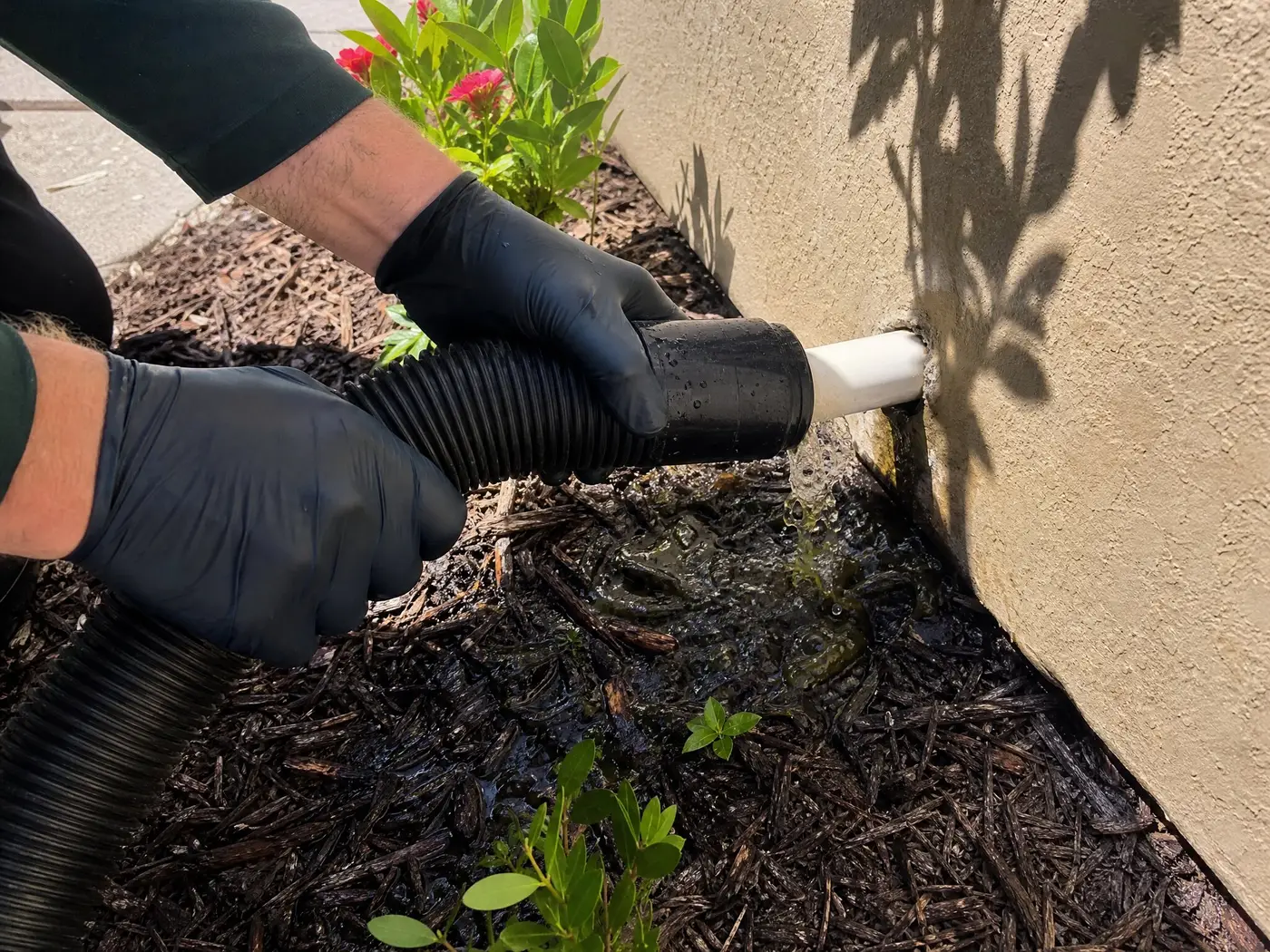
In Estero that line usually ends at a short pipe near the foundation, often in a mulch bed like the one in the photo. During the rainy season the system pulls a lot of water out of the air, so the drain is working hard for months.
It clogs because the water isn’t clean. Dust that gets past the filter mixes with the moisture on the coil and forms a sludge, and algae and mold grow in the wet line. Over time that slime narrows the pipe until the water backs up.
Signs of a clogged AC drain line
- Water on the floor around the air handler in the garage or closet
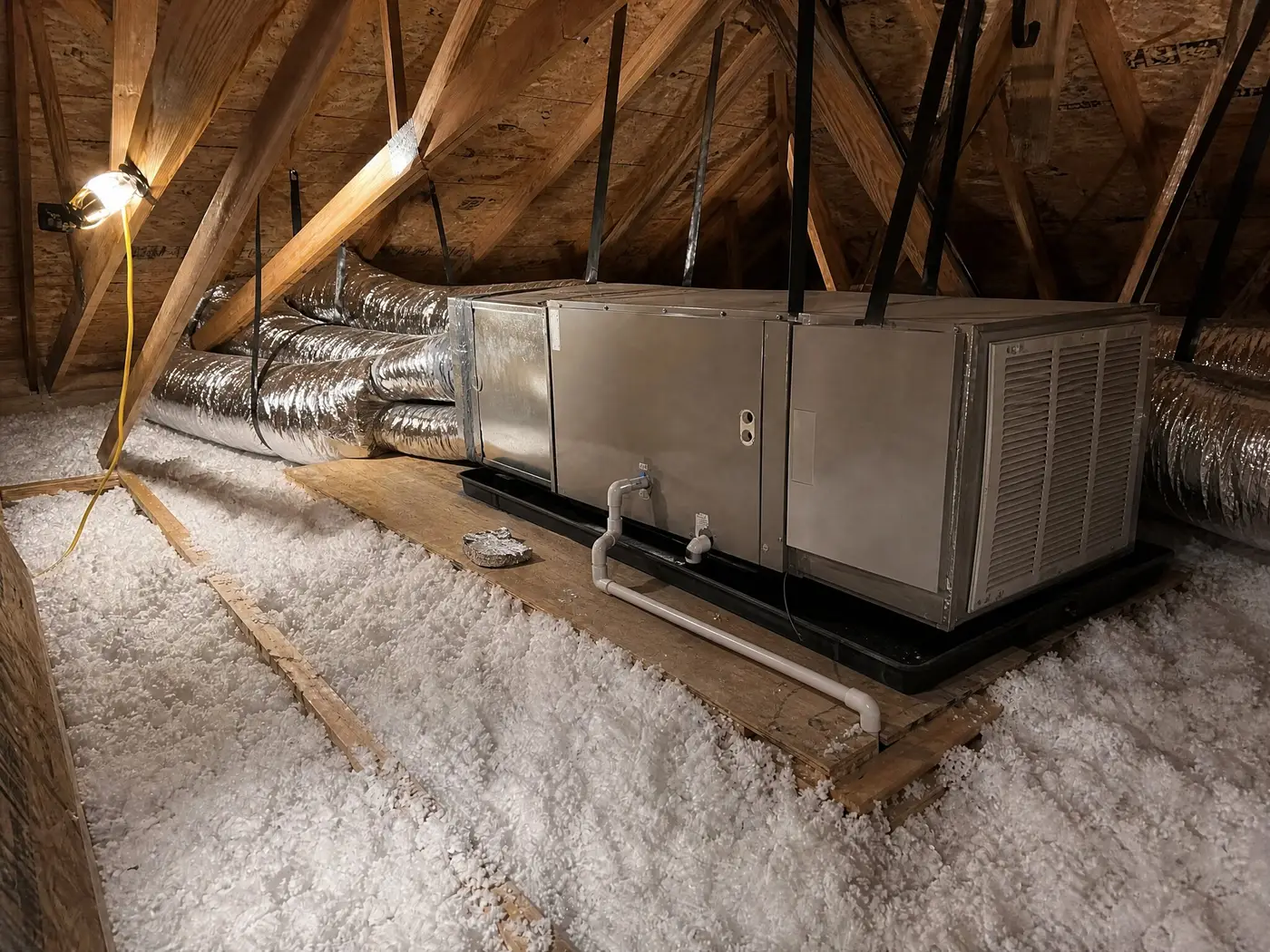
- Water sitting in the pan under the unit, or in a second pan under an attic air handler
- A water stain spreading on the ceiling below an attic unit
- The AC shut itself off and won’t restart, even though the thermostat is calling for cooling
- Nothing dripping from the outdoor drain pipe on a humid afternoon while the system runs
- A musty smell near the air handler, or a house that feels clammy
What the float switch is doing
Where an overflow could damage the house, the Florida Building Code requires a backup. It allows four kinds: a second pan with its own drain, an overflow line from the unit’s own pan, a second pan with a water level switch, or a water level switch in the drain line or pan.
The switches are what most people call a float switch. When water rises, the float lifts and cuts power to the system before the pan overflows. That’s why a clogged drain often shows up as an AC that quit, not as a puddle.
The backup drains are meant to end somewhere you’ll notice, such as a pipe above a window. If water is dripping from one of those, the main line is blocked.
Don’t bypass a tripped float switch to get the AC running again. The next stop for that water is your ceiling.
What you can safely do
Start by turning the system off at the thermostat, then at the breaker or the disconnect box by the outdoor unit.
Check the pan
Look in the pan under the air handler. If it’s holding water, soak it up with towels or a wet/dry vac.
Find the outside end
Follow the drain to where it leaves the house, usually a short PVC pipe near the foundation. Pull back any mulch or dirt covering it.
Pull the clog from outside
Hold the wet/dry vac hose tight over the end of the pipe, wrap the joint with a rag and run it for a minute or two. Clogs often come out as a dark, slimy plug.
Flush from inside
If the line has a capped access tee near the air handler, pour in a cup of distilled vinegar and let it sit about 30 minutes. Then pour in clean water and check that it runs out the far end.
Restart and watch
Turn the power back on and let it run. If the switch trips again or the pan refills, the clog is deeper than a vacuum can reach.
Stick to distilled vinegar or a cleaner labeled safe for PVC drain lines. A vinegar flush once a season is prevention, not a cure for a line that’s already packed solid.
When to call us
Call if water has reached a ceiling, if the clog comes back within weeks, or if the pan under the unit is rusted or cracked. Same goes for a float switch that keeps tripping with a clear line, which can mean the drain doesn’t have enough slope.
On a drain call we clear the line, flush it, check its slope and test the float switch. If there’s no access point near the air handler, we can add one so the next cleaning takes minutes.
AC acting up? Tell us what it’s doing.
Call or text, or tap the chat button in the corner. Tell us what the system is doing and where you are, and we’ll take it from there.
Need ac maintenance?
AC maintenance is what we do every day. Call or text and tell us what the system is doing.
Questions we get
How often should the AC drain line be cleaned?
We flush it at every tune-up. Between visits, a cup of distilled vinegar down the access tee once a season helps keep the slime from building up.
Why does my drain line keep clogging?
Usually it’s a dirty coil feeding sludge into the line, a filter that lets too much dust through, or a line without enough slope. We’ll look for the cause, not only the clog.
Can a clogged drain stop my AC from cooling?
Yes. If the float switch trips, it shuts the system off, so the house warms up even though nothing else is wrong.
Is water dripping outside my house normal?
Yes, from the main drain pipe near the foundation, especially on humid days. Water from a pipe over a window or out of the soffit is a backup drain, and that means the main line is blocked.