AC installation and replacement in Estero
When it’s time for a new system, we size it to the house, install it carefully and walk you through it before we leave. We install central AC, heat pumps and ductless mini-splits across Estero, Fort Myers and Bonita Springs.
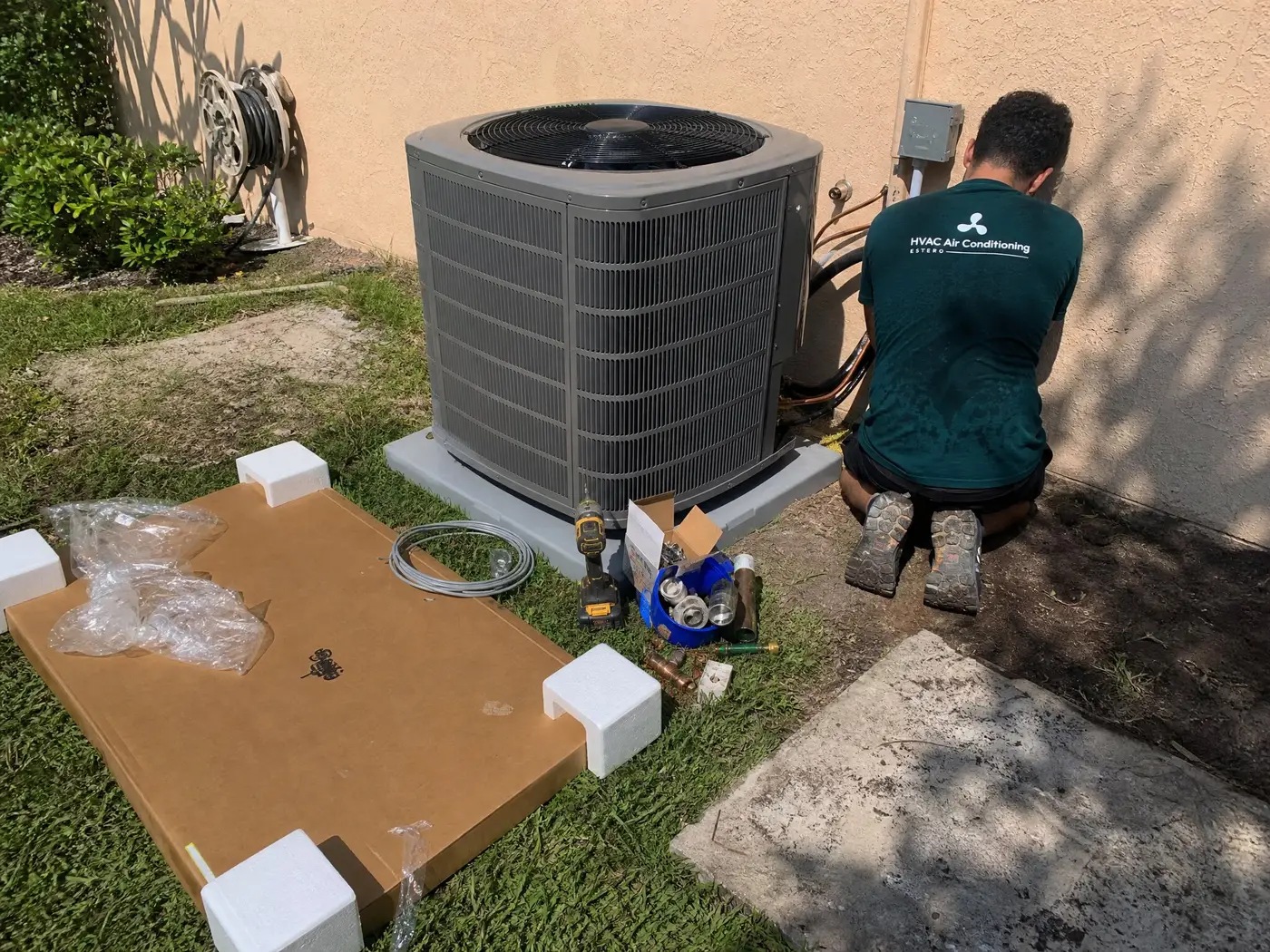
Sizing comes first
Bigger isn’t better with air conditioning. A system that’s too large cools the house fast, shuts off and starts again a few minutes later. The Department of Energy’s guide for contractors points out that oversized units cycle on and off often and don’t dehumidify as well, which matters a great deal in a climate like ours.
Florida’s energy code requires new equipment to be sized with ACCA Manual S, based on loads calculated with ACCA Manual J or another approved method. That calculation looks at the house itself: square footage, windows, insulation and which way the walls face. A lake home with a wall of glass facing west can need a different system than a house of the same size next door.
If the old unit was oversized, we’ll tell you. The new one doesn’t have to match it.
What we install
Central AC and heat pump systems
A matched outdoor unit and air handler. A heat pump cools all summer and runs in reverse for heat on the few cold nights we get.
Outdoor unit or air handler only
Sometimes one half of the system has years left in it. We’ll tell you when replacing one side makes sense and when both need to go.
Ductless mini-splits
For a garage, a bonus room, an enclosed lanai or an addition with no ducts. The indoor head connects to the outdoor unit through a small hole in the wall.
Thermostats
Programmable and smart thermostats set up for the equipment you have, including the settings a heat pump needs.
Install day, step by step
Recover the old refrigerant
Refrigerant can’t be vented. We pull it out of the old system before anything gets disconnected, and the old equipment leaves with us.
Set the pad and the unit
The Florida Building Code wants outdoor equipment on a level slab at least 3 inches above grade and installed to resist wind, so the unit is set level and anchored down.
Run and braze the line set
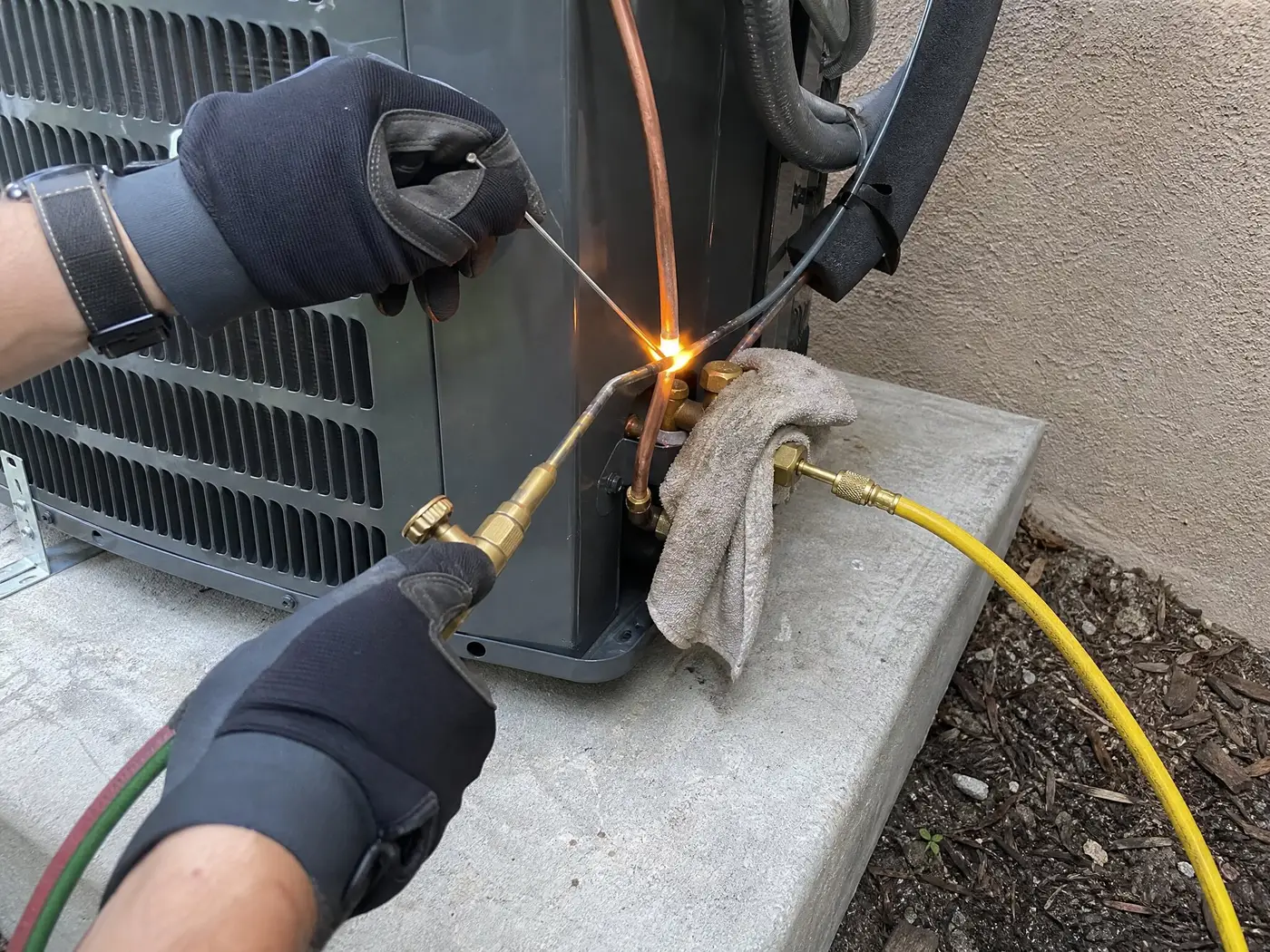
New copper where the old line set is the wrong size or worn out. The joints get brazed, then the lines are pressure tested and pulled into a deep vacuum before any refrigerant goes in.
Build the drain and the safety switch
A clean PVC drain with the slope it needs, plus a float switch or secondary pan wherever an overflow could damage the house, which the code requires.
Start it up and walk you through it
We check pressures and the air at the vents, set the thermostat, and show you the filter, the drain and the breaker.
Efficiency and refrigerant rules for new systems
Since January 1, 2023, a new split system air conditioner installed in the Southeast, Florida included, has to meet at least 14.3 SEER2 if it’s under 45,000 Btu per hour, or 13.8 SEER2 at that size and up. Split heat pumps carry a 14.3 SEER2 minimum nationwide. Higher ratings use less electricity for the same cooling.
The refrigerant is changing as well. Under the EPA’s Technology Transitions rule, new residential split systems built from 2025 on use refrigerants with a global warming potential below 700, such as R-454B or R-32, in place of R-410A. Equipment whose parts were all made before 2025 can still be installed, and repair parts for existing R-410A systems are still allowed.
Ask which refrigerant your new system runs and keep the answer with your paperwork. It decides what a technician needs to service it years from now.
Mini-splits for the rooms the ducts don’t reach
Garages turned into gyms, bonus rooms over the garage, enclosed lanais and additions are the usual candidates. Running new ductwork to those rooms is often more trouble than it’s worth.
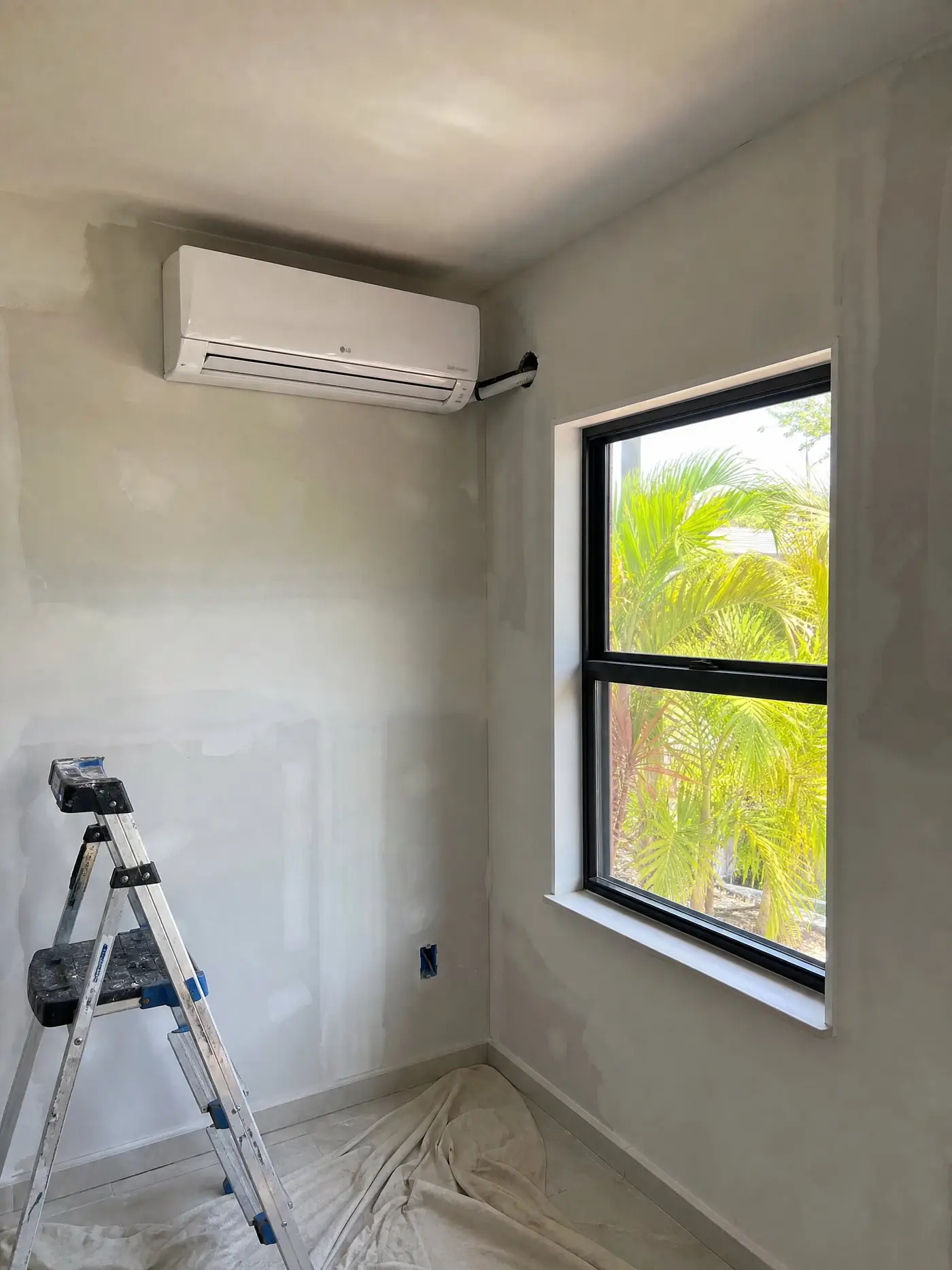
A ductless system puts a slim head on the wall inside and a small outdoor unit on a pad. The two connect through a small hole for the refrigerant lines, power and drain. The room gets its own thermostat, so it can run when you’re using it and sit idle when you’re not.
Not sure whether to replace yet? Our repair or replace guide walks through age, refrigerant and the size of the repair.
AC acting up? Tell us what it’s doing.
Call or text, or tap the chat button in the corner. Tell us what the system is doing and where you are, and we’ll take it from there.
Related
AC repair
Warm air, a humming outdoor unit, water at the air handler or a system that shut itself off. We find the cause, show you and fix it.
AC repair detailsAC maintenance
Tune-ups that rinse the coils, flush the drain, test the capacitor and check refrigerant pressures before the rainy season puts the system to work.
AC maintenance detailsRepair or replace your AC
How to weigh the system’s age, its refrigerant and the size of the repair before you spend money on either option.
Read the guideQuestions we get
How do I know what size AC I need?
From a load calculation on your house, not from the size of the old unit. Florida’s energy code requires one, and we do it before we recommend equipment.
Do I have to replace the air handler too?
Not always. If the air handler is newer and runs the same refrigerant, it may stay. If the old system runs R-22, the EPA notes that newer refrigerants won’t work well without changing system components, so the indoor side usually changes with it.
Will a new system lower my electric bill?
A newer system at 14.3 SEER2 or higher uses less electricity than an old one for the same cooling. How much you save depends on the house and how old the old system was, so we won’t promise a number.
Do you take the old equipment away?
Yes. We recover the refrigerant, disconnect everything and haul the old unit off.
Can I switch from a straight AC to a heat pump?
Usually, yes. A heat pump handles cooling the same way and adds heat for cool nights. The EIA’s 2020 survey counted about 31 percent of Florida homes heating with a central heat pump.