Repair or replace your AC: how to weigh age, refrigerant and cost
Nobody wants to buy a new system when a repair would do, and nobody wants a big repair on a unit that’s on its last summer. These are the things we look at with you, in the order we look at them.
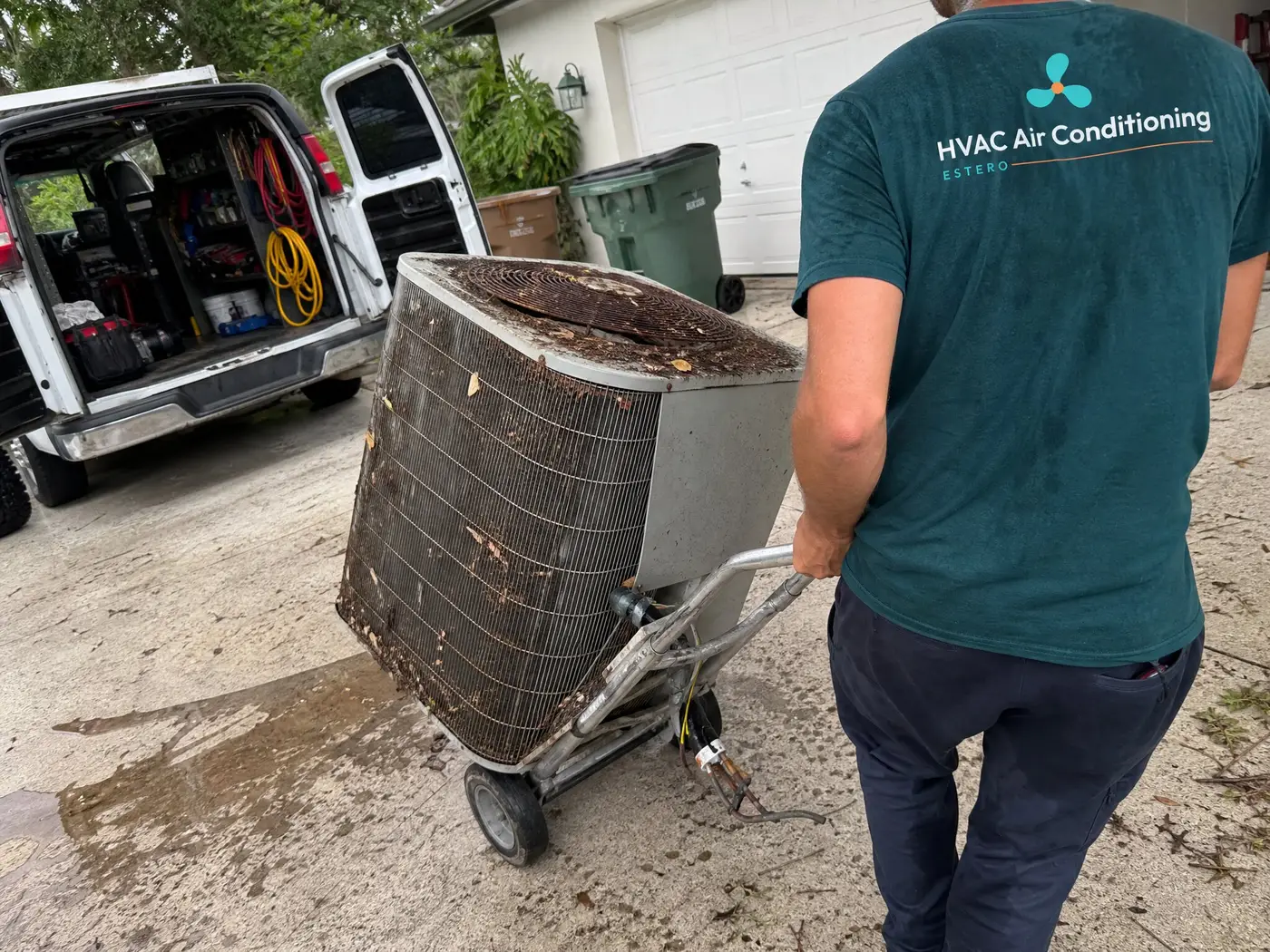
Start with the nameplate
The sticker on the side of your outdoor unit holds most of what you need. The EPA notes that the nameplate lists the refrigerant the system uses, and the model and serial numbers tell us its size and often the year it was built.
Snap a photo of it and text it to us if you like. We can read it for you before anyone comes out.
How old is it?
ENERGY STAR suggests considering a replacement once a heat pump or air conditioner is more than 10 years old, and the EPA recommends having a system that age evaluated if it isn’t keeping the house comfortable.
Ten years isn’t the day it dies. It’s the point where the question is worth asking, because the federal efficiency minimums went up in 2023 and the big parts have a lot of hours on them by then. A ten year old system that needs a capacitor is a very different case from one that needs a compressor.
What refrigerant does it run?
If the nameplate says R-22, that weighs heavily. No new R-22 has been made or imported in the US since January 1, 2020, so service depends on reclaimed and older stock. The EPA also notes there’s no drop in replacement: other refrigerants won’t work well without changes to system parts.
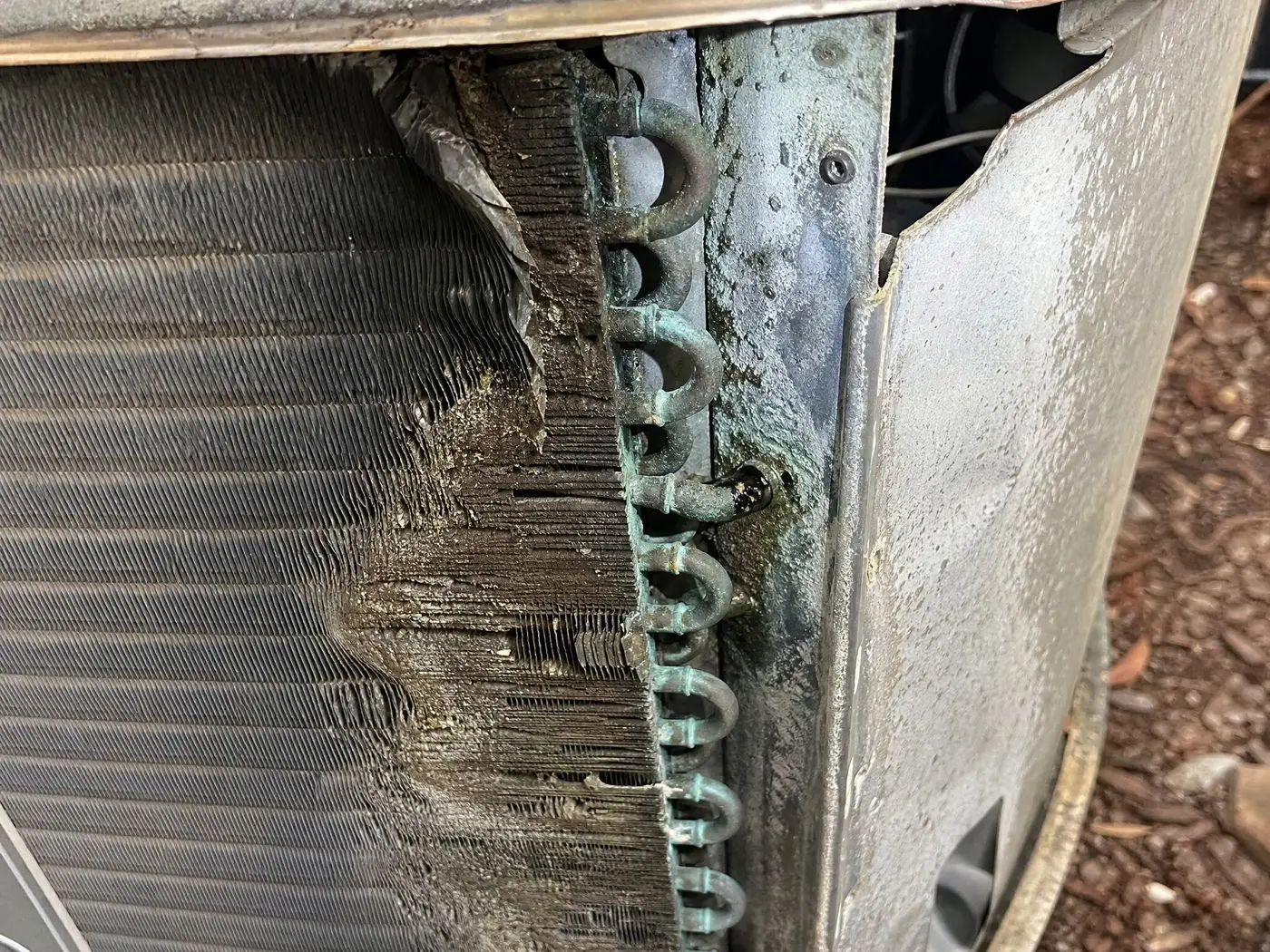
For a small repair on an R-22 system that doesn’t involve the refrigerant, fixing it can still make sense. For a big leak or a coil like the one in the photo, with the fins crumbling and the copper bends corroded, we’d usually point you toward replacing.
R-410A systems are still serviced normally, and EPA rules allow repair parts for them. New split systems built from 2025 on use refrigerants with a lower global warming potential, such as R-454B or R-32.
How big is the repair?
Put the repair quote next to what a new system would cost and ask how many more summers the repair buys. We’ll give you both numbers, and you decide.
Frequency matters as much as size. ENERGY STAR lists frequent repairs and rising energy bills as a sign it may be time. A first repair in eight years is one thing. A third repair since spring is another.
The compressor is the part that changes the math most. It’s the most expensive component in the outdoor unit, so a failed compressor on a system near or past ten years old is usually where we’d start pricing a new one with you.
How does the house feel?
Comfort is evidence too. ENERGY STAR names humidity problems, excess dust and rooms that never get comfortable as reasons to look at replacement. Some of those can be fixed without a new system, like a clogged drain or a fan left on On, so we check the cheap causes first.
If the system is the right size and in good shape but the house still feels sticky, a new unit won’t solve it. If the old one was oversized from the start, a correctly sized replacement often will.
How we usually see it
These are rules of thumb, not rules.
Usually repair
A capacitor, contactor, fan motor, float switch or drain clog on a system of any age. These are small parts, and replacing a whole system over one makes no sense.
Worth a conversation
A refrigerant leak or a failed evaporator coil on a system near or past ten years. The age, the refrigerant and the price all count here.
Usually replace
An R-22 system with a major leak, a failed compressor on an older unit, or a coil that’s rotted through.
Signs it may be time to replace your AC
- The system is more than 10 years old and needs repairs more often
- Your energy bills keep climbing with no change in how you use the house
- Some rooms never get comfortable, or the house stays humid and dusty
- The nameplate says R-22 and the system has a refrigerant leak
- The outdoor coil is corroded or the compressor has failed
If you replace it
Size the new system from a load calculation on the house, the way Florida’s energy code requires, not from the size of the old one. A new split system air conditioner in Florida has to meet at least 14.3 SEER2 if it’s under 45,000 Btu per hour, or 13.8 SEER2 above that, and a new split heat pump has to meet 14.3 SEER2.
Our AC installation page walks through what install day looks like, from recovering the old refrigerant to the float switch on the new drain.
AC acting up? Tell us what it’s doing.
Call or text, or tap the chat button in the corner. Tell us what the system is doing and where you are, and we’ll take it from there.
Need ac installation?
AC installation is what we do every day. Call or text and tell us what the system is doing.
Questions we get
How long do air conditioners last in Florida?
We’d rather not give you a number we can’t back up. Age matters, but so does how hard the system worked, how well it was maintained and how much sun and storm it took. ENERGY STAR’s line is to start weighing replacement after 10 years.
Can I replace only the outdoor unit?
Sometimes. On a newer R-410A system with a healthy air handler, it can work. On an R-22 system, EPA rules allow a replacement outdoor unit if it meets today’s efficiency standard, but switching refrigerants means changing indoor parts too.
Is it worth recharging an old R-22 system?
Only if the leak gets found and fixed first. Recharging a leaking R-22 system means paying for scarce refrigerant that leaks right back out.
Will you push me to replace?
No. If a repair makes sense, we’ll say so. If it doesn’t, we’ll show you why and give you both prices.